

Our mission
Powerful AI, finally built for younger minds.
Archimedes is a patient AI tutor that lets every child learn at their own pace and move on only once a skill is truly theirs. The goal: independent, driven, ambitious and creative kids, wherever they live.
Written by Thomas, founder of Archimedes, Perth WA. Last updated 18 October 2026.
AI is powerful. It just wasn't built for kids.
AI can explain almost anything, at any hour, as many times as you need. That should be a gift for every child learning to read, add, or wonder why the sky is blue. But almost every AI tool was built for adults. Point a nine-year-old at one and you see the problem fast.
Most AI today
- Hands over the answer in seconds
- Long walls of text
- Talks about anything, to anyone
- No idea what the child already knows
- Rewards keeping them on the screen
What younger minds need
- A question that helps them find it
- Short, spoken sentences they can follow
- Sticks to learning, with guardrails
- Builds on what they've already mastered
- Rewards getting something right, for good
None of that is the AI's fault. It just wasn't designed for them. Archimedes is.
AI lets us rewrite the barriers to education
Great teaching should not depend on postcode, price, or luck.
For most of history, the best learning has gone to the kids who could get it. A private tutor at the kitchen table. A teacher with time for just them. A parent who happened to be good at fractions. AI gives us a rare chance to change that. Not by replacing teachers, but by giving every child the patient, one-on-one help that used to be a luxury.
Cost
Patient one-on-one help is priced for the few.
A patient tutor at a price families can actually manage. See pricing in the open.
Postcode
The best help clusters where the money is.
The same patient tutor, whether you're in a Perth suburb or a wheatbelt town.
Time
Help only happens when someone's free.
Help is there when the homework is.
Patience
Even great adults run out of it at 7pm.
Archimedes never sighs, never rushes, and never makes a child feel slow.
What is self-paced mastery learning?
Self-paced mastery learning is simple to say and hard to do: a child moves on when they've truly got a skill, not when the calendar says so.
In a typical classroom, time is fixed and understanding varies. The class spends two weeks on fractions, then moves on, whether a child got 95% or 55%. The gaps don't vanish. They follow the child into the next topic, and the one after that.
Mastery learning flips it. Understanding is fixed, and time varies. Every child gets as long as they need to make a skill secure, then builds on it.
If you've heard of the Kumon method, you already know the feel of it: start where the child is comfortable, practise a little and often, and only step up once the current level is solid. Archimedes takes that same idea and adds a tutor that talks it through with your child, plus a clear picture for you. Archimedes isn't connected to Kumon in any way. It's just a familiar reference point.
-
01
Start where your child actually is
Not where their year level says they should be. If a Year 5 needs to firm up a Year 3 skill first, that's where we begin, quietly and without labels.
-
02
Move on when it's secure, not when time's up
We estimate, skill by skill, how likely it is your child has really got it. That's Bayesian Knowledge Tracing, explained in plain English on the Parents page.
-
03
Never skip the foundations
Skills sit on a living map, with prerequisites visible. New learning only stacks on ground that's solid.
Key takeaway: In most classrooms, time is fixed and understanding varies. With mastery learning, understanding is fixed and time varies.
Independent, driven, ambitious and creative
We're not building Archimedes to get kids through worksheets faster. We're building it to help them grow into a particular kind of learner.
Independent
Maria Montessori built her approach around children doing things for themselves, with an adult who guides rather than takes over. That's the role we want Archimedes to play. It asks before it explains, hints before it shows, and leaves the final step to your child.
Driven
Kids push on when they can see themselves getting better. Archimedes shows them real progress: you've nailed this one, ready for the next? Not points, streaks, or confetti. Just the honest feeling of something clicking.
Ambitious
Self-paced works in both directions. A child who's ready to go further isn't held back waiting for everyone else. Once a skill is secure, the next one is right there.
Creative
Real understanding is what makes creativity possible. A child who truly gets multiplication can start playing with it. We want Archimedes to leave room for a child's own questions, the "but what if" moments, not just the ones on the worksheet.
The ideas we stand on
Archimedes didn't invent good teaching. We borrow from people who spent their lives studying how children learn.
Montessori
Independence and self-direction
Montessori classrooms let children choose their work, go at their own pace, and learn by doing, with the adult as a guide. We take the self-pacing and the respect for a child's independence.
Vygotsky
The zone of proximal development
Lev Vygotsky described the sweet spot between what a child can do alone and what they can do with help. He argued that's where guidance does the most good. Archimedes aims its questions right there: not too easy, not out of reach.
Piaget
Children build their own understanding
Jean Piaget argued that children aren't empty vessels. They construct understanding by exploring, and they think differently at different ages. It's why Archimedes asks questions instead of lecturing, and part of why we're building hardware kids can move and handle. See the hardware plans.
Reggio Emilia
Learning made visible
The Reggio Emilia approach sees children as capable and curious, and treats documenting their learning as a way to bring families in. That shapes how much we show parents. See what parents see.
These are ideas that shape our design. We're not claiming any formal affiliation with these approaches or the organisations that teach them.
A note from Thomas, our founder
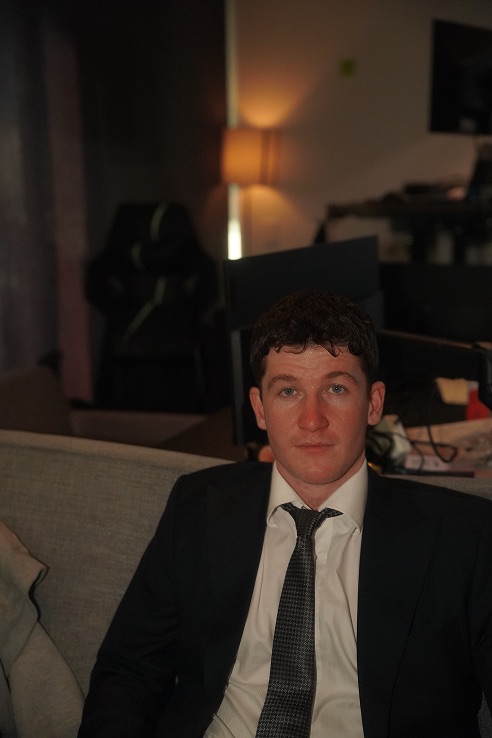 Thomas on LinkedIn
I grew up in Pinjarra and went to the local public school, Pinjarra Senior High. I was lucky long before I knew it. Two older sisters taught me the basics of maths and English at the kitchen table and read me stories at night. My mum worked as an education assistant, so school never felt like a mystery in our house. It felt like something worth showing up for.
That head start carried me a long way. I graduated as dux of my school, loving chemistry, physics and mathematics, and went on to study engineering at university. Then something changed. The way it was taught started to wear down the curiosity that had got me there. I could feel it making me resent the subjects I loved, so I walked away. Later I came back to study international business, but that experience never left me.
Here's what it taught me. Talent and motivation aren't handed out evenly. Mine was built by people who had the time and patience to sit beside me. Most kids don't have two older sisters and a mum inside the school system. And the wrong kind of teaching can put out a spark that should have lasted a lifetime.
Archimedes is my attempt to give every child what I had: patient, personal help that meets them where they are and keeps the spark alive.
— Thomas, founder, Archimedes
Our principles
Mastery, not minutes
We measure what your child has learnt, skill by skill, not how long they sat there.
Guardrails, not open chat
Archimedes is a tutor, not a chatbot friend. It sticks to learning and doesn't just hand over answers.
Private by default
We collect what the tutor needs to teach well, and nothing more. Read the privacy notes.
Hardware that lasts
When our robotics arrive, they'll be designed to keep doing their core job even if the internet drops, or if we ever disappear. Read the longevity pledge.
Grounded in a real curriculum
Self-paced doesn't mean made-up. Archimedes is being mapped to the Western Australian Curriculum, set by the School Curriculum and Standards Authority (SCSA) and taught in WA schools from Kindergarten to Year 10.
Your child goes at their own speed, along the same path their teacher is following. We'll say which year levels are live as each one is ready.
What we won't do
Some lines are easier to draw early. Here are ours.
-
 No ads. Not to kids, not to parents.
-
No selling your data. Your child's learning isn't a product.
-
No open-ended companion chat for kids.
Archimedes is a tutor, not a best friend.
-
No noisy rewards. Calm, lasting skill beats streaks and confetti.
-
No invented curriculum.
Learning stays grounded in a real curriculum, checked by people.
-
No overpromising.
We'll tell you what we know and what we're still measuring.
See our results so far.

Follow the journey
We write about the build, the wins, and the mistakes in the Archimedes newsletter.
-
 Teachers
AI in schools: what AERO's new advice means for teachers
Is AI helping students learn, or doing their thinking? AERO's new advice on AI in schools in plain English, with class scripts. Read the 6-minute guide.
-
 Parents
Sunday night routine for kids: 5 steps to calm Mondays
Mondays don't have to start in chaos. A simple Sunday night routine for kids helps them sleep, plan and pack for the week. Try these 5 steps tonight.
-
 Technology
Building an edtech newsletter: what we learned today
We spent a Sunday building the Archimedes newsletter from scratch. Here's the stack, the lessons, and why staying current matters. Try Archimedes free.
By clicking Sign Up, you agree to our Privacy Policy .
FAQ
What is Archimedes?
Archimedes is an educational AI tutor built for kids, not adults. Children talk or type with a patient tutor that asks guiding questions instead of handing over answers, and moves on only once a skill is secure. Parents see what is mastered, what is stuck, and what comes next. Learning robotics hardware is coming.
What is self-paced mastery learning?
It means a child moves on when they have truly got a skill, not when the calendar says so. Each child starts where they actually are, practises until the skill is secure, then builds on it. Time varies from child to child. Understanding does not.
Is Archimedes like Kumon?
It shares the core idea of self-paced mastery: start where your child is comfortable and step up once each level is solid. The difference is a spoken tutor that talks problems through, plus a skill-by-skill picture for parents. Archimedes has no connection to Kumon.
Why not just let my child use a regular AI chatbot?
General chatbots were built for adults. They tend to hand over answers, write long replies, and talk about anything. Archimedes is built for younger minds: short spoken sentences, guiding questions, guardrails that keep it on learning, and a real curriculum underneath.
Who is behind Archimedes?
Archimedes was founded by Thomas. He grew up in Pinjarra, Western Australia, and started Archimedes to give every child the patient, personal help he had at the kitchen table.
Will Archimedes replace my child's teacher?
No. Archimedes is extra, self-paced help at home, not a replacement for school. It is being mapped to the same Western Australian Curriculum a child's teacher uses, so practice at home lines up with what happens in class.
Is Archimedes safe for kids?
Child safety is a core principle. Archimedes is a guardrailed tutor that sticks to learning, not an open-ended chatbot, and we do not show ads or sell data.